

The State We're In
El Niño: When the Pacific makes waves in New Jersey
By Alison Mitchell, Executive Director, New Jersey Conservation Foundation
We live on one big, interconnected planet, and what happens on the other side of the globe can have surprising consequences here at home. Our oceans, atmosphere, and weather systems don’t recognize borders or state lines! That’s why a change in ocean temperatures thousands of miles away can influence the winds above New Jersey, shape the storms that move along our coast, and even affect whether we experience a mild, rainy winter or a snowy one.
You’ve probably heard that El Niño, a natural climate pattern that begins when warm ocean water develops in the tropical Pacific, is unfolding right now. El Niño is expected to strengthen through the fall and have its greatest influence during the winter, when its effects on weather patterns in New Jersey are most likely to be felt. But what exactly is happening?
Unusually warm water releases more heat and moisture into the atmosphere during El Niño, changing where large areas of rising air and thunderstorms form. The shift sends ripples through the atmosphere, altering the position and strength of the jet stream – the fast-moving band of air that steers weather systems across the country.
While we can’t predict exactly what the winter months will bring, El Niño tends to shake things up, especially along our coast.
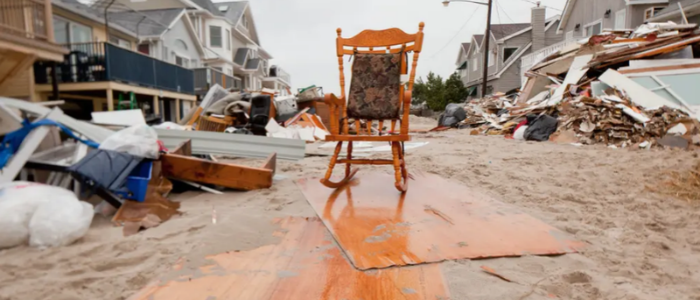
New Jersey is home to hundreds of miles of coastline, along with bays, rivers, and wetlands – and communities that depend on them. We know well what flooding looks like after a major storm, including the recent nor’easter that battered the Jersey Shore. But flooding doesn’t always require a hurricane or other big event. High tides themselves can cause water to spill onto roads and into neighborhoods, particularly as sea levels are rising at the fastest rates since the end of the last ice age.
This year, the National Oceanic and Atmospheric Administration (NOAA) calls for 15 to 20 high-tide flooding days in the Mid-Atlantic. NOAA also expects El Niño to increase the likelihood of onshore winds and storms during the coming cool season, which can add to the risk of coastal flooding.
While El Niño is a natural climate pattern, the sea-level rise we’re experiencing is a long-term consequence of a warming climate. Together, climate change and El Niño make coastal flooding more likely, meaning that tides, strong winds, or even a relatively modest storm can send water into places that haven’t flooded before.
What can we do about it? We can start by protecting more wetlands and other natural areas which help reduce flood damage by slowing down and absorbing excess water. Wetlands act like natural sponges, holding water during heavy rain and coastal flooding and releasing it more gradually.
But protecting uplands from development is also critical! When forests and farms are replaced by pavement and buildings, less rain soaks into the ground, and more runoff reaches streams and rivers quickly.
Rather than continuing to build without much regard to natural systems, we need our state legislature and the New Jersey Department of Environmental Protection (NJDEP) to strengthen protective regulations against ever-growing, unsustainable development pressures. That’s why the NJDEP’s decision to delay the solid measures adopted by the Murphy administration – known as the REAL (Resilient Environments and Landscapes) rules – is so disappointing and difficult to understand.
We should also accelerate the pace of protecting uplands from development through the State Green Acres Program and use the Blue Acres Program to help move more willing homeowners out of repeatedly flooded areas. And we can reduce unnecessary impervious cover and restore places where asphalt can be replaced with soil, native vegetation, and other green infrastructure.
We often take the beautiful wetlands, forests, and other natural areas of New Jersey for granted. But these special places form the infrastructure that helps protect our communities and supports clean water, wildlife, and vital ecosystems.
The Pacific Ocean may be thousands of miles away, but our atmosphere connects us all. We can’t control when El Niño arrives or what it will bring, but we can recognize these patterns and learn from them. If we build smarter and conserve and restore natural areas, we will be better prepared for whatever weather tomorrow brings.
To learn more about preserving New Jersey’s land and natural resources, visit the New Jersey Conservation Foundation at www.njconservation.org or contact info@njconservation.org.
About the Authors
Alison Mitchell
Executive Director
Michele S. Byers
Executive Director, 1999-2021
John S. Watson, Jr.
Co-Executive Director, 2022-2024
Tom Gilbert
Co-Executive Director, 2022-2023
View their full bios here.
Filter
Get The Latest News
From The Garden State
In the
News