

The State We're In
‘Tis the season to share – not waste – our food
By Alison Mitchell, Executive Director, New Jersey Conservation Foundation
The holiday season is officially underway, and food is taking center stage. As we gather around the table to celebrate with family and friends, it’s a good time to think about how much food gets thrown away and why it matters for the environment.
According to the United Nations, more than 1 billion tons of food – 17 percent of all food available to consumers worldwide – goes into trash bins every year! When this discarded food decomposes in landfills, it releases methane, a potent greenhouse gas. The land, water, energy, labor, and resources used to grow, process, package, and transport that food are wasted, too.
When we account for its lifecycle, the wasted food contributes to more than 8 percent of global greenhouse gas emissions. That’s nearly five times the emissions produced by the entire aviation sector. If food waste were a country, it would be the third-largest greenhouse gas emitter in the world.
According to the New Jersey Department of Environmental Protection (NJDEP), approximately 22 percent of all of our state’s solid waste consists of food, some of which was still edible when discarded.
What can we do about it? A little planning can go a long way. Before you head to the grocery store, check the refrigerator and pantry, make a shopping list, and buy only what you can realistically use. Plan meals around ingredients that are already on-hand, store food properly to extend its shelf life, and remember that date labels, such as “best if used by,” can indicate quality rather than food safety. Freeze leftovers and consider sharing extra food with neighbors or donating unopened, unspoiled items to a local food pantry rather than tossing it.
Businesses, restaurants, and schools have an important role to play, too. Better inventory management, thoughtful purchasing, and partnerships with food banks can keep perfectly good food in circulation. Surplus food that cannot be donated can be kept from landfills through composting and recycling programs.
Larger policy action is also needed, and fortunately this state we’re in has taken some steps in the right direction. New Jersey’s Food Waste Reduction Act, signed into law in 2017 by Governor Chris Christie, established an ambitious goal: reduce food waste by 50 percent by 2030, using 2017 levels as the baseline.
There are encouraging signs of progress. A recent NJDEP report found that food waste generation declined 14 percent between 2017 and 2022, thanks to prevention, food donation, and composting efforts. More recently, legislation signed by Governor Phil Murphy established a 50 percent food waste reduction goal for each county by 2035.
There’s a lot more to be done! We need to support local food recovery organizations and food banks, encourage businesses to donate surplus food, expand composting opportunities, and urge municipal and county leaders to make food waste reduction a priority. Residents can explore NJDEP’s Food Waste Reduction resources at https://dep.nj.gov/dshw/swpl/fw/ for ideas on how to be part of the solution.
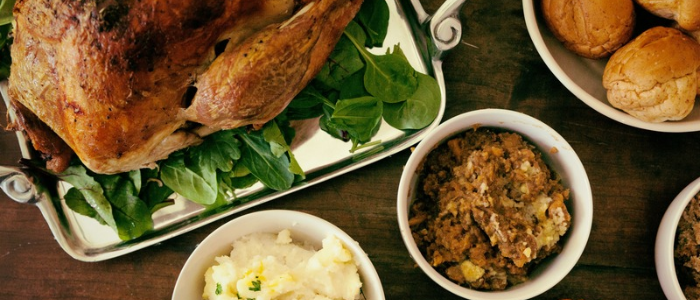
It’s a gift to have a Thanksgiving spread with an array of colorful dishes and delectable treats. As we come together and give thanks for the bounty, let’s also think about what happens to the food left behind. A little more planning and a little less waste can help make sure our holiday tables are full without taking an unnecessary toll on the planet.
To learn more about preserving New Jersey’s land and natural resources, visit the New Jersey Conservation Foundation at www.njconservation.org or contact info@njconservation.org.
About the Authors
Alison Mitchell
Executive Director
Michele S. Byers
Executive Director, 1999-2021
John S. Watson, Jr.
Co-Executive Director, 2022-2024
Tom Gilbert
Co-Executive Director, 2022-2023
View their full bios here.
Filter
Get The Latest News
From The Garden State
In the
News