


The State We're In
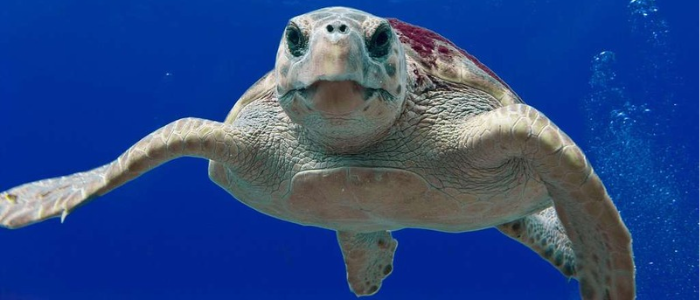
Sea turtles off the coast of New Jersey
By Alison Mitchell, Executive Director, New Jersey Conservation Foundation
Think you have to travel far to find iconic sea turtles? Think again!
Of the seven species of sea turtles found around the world, at least four can be seen along the Jersey Shore: loggerheads, Kemp’s ridleys, green sea turtles, and leatherbacks. Each has its own personality, preferences, and unique niche in the marine ecosystem.
When ocean water temperatures reach 70 degrees Fahrenheit or higher during summer and early fall, several species of sea turtles migrate from tropical waters to additional foraging grounds as far north as New Jersey. New Jersey’s coastal habitats provide important feeding opportunities for the sea turtles, especially juveniles growing into adulthood.
During the warmer months, our coastal waters offer a smorgasbord of sea turtle favorites. Depending on the species, the menu might include crabs, jellyfish, seagrasses, and other marine life. Loggerheads, known for their powerful jaws, are especially well suited to crushing hard-shelled prey. Green sea turtles have a more plant-based diet as they mature, while leatherbacks are jellyfish specialists, capable of diving deep into the ocean in search of their slippery meals. Kemp’s ridleys, the smallest of the sea turtles, are particularly fond of crabs. To each their own!
Many turtles that spend the warmer months feeding in northern waters begin moving south as temperatures drop. This fall migration is part of their natural seasonal rhythm, shaped by water temperature, food availability, and the needs of each species.
But migration isn’t always a smooth trip. One risk these marine treasures face is cold-stunning.
Sea turtles are cold-blooded marine reptiles, meaning their body temperature is influenced by the water around them. Cold-stunning happens when sea turtles fail to complete their migration south in time as water temperatures drop below 50 degrees Fahrenheit. Their bodies slow down, leaving them weak, unable to swim normally, and sometimes stranded on beaches. Without help, cold-stunning can be fatal.
If you spot a sea turtle washed ashore or floating motionless in shallow water, don’t assume it is dead, and never push it back into the ocean. Keep your distance, note its location, and contact a qualified sea turtle rescue organization for instructions. A quick report can make a real difference. If you ever see a sea turtle in New Jersey that appears to be injured, entangled, sick, dead, or being harassed by a person, call Sea Turtle Recovery at 609-667-4076, and visit https://seaturtlerecovery.org/ to learn more. You can also call the 24-hour Marine Mammal Stranding Center hotline at 609-266-0538, which is open 365 days a year. If you are on a vessel, please contact the Coast Guard using channel 16.
Sea turtles depend on healthy, connected ocean habitats to find food and move between seasonal feeding grounds. Pollution, marine debris, habitat degradation, and interactions with fishing gear can make an already challenging journey more dangerous. Protecting New Jersey’s coastal waters helps these animals find the food and space they need to survive.
While thriving oceans and estuaries support marine life, they also sustain fisheries, contribute to resilient coastal ecosystems, and help make the Jersey Shore the special place so many of us love. Keeping our beaches clean, reducing single-use plastics, respecting wildlife, and supporting science-based conservation efforts are all ways to help these habitats thrive.
The next time you’re watching waves roll in or walking along the water’s edge, remember that sea turtles are out there, too, playing their evolutionary role in our ocean’s unique story. That’s just one more reason to love our shore, long after the summer crowds have gone home.
To learn more about preserving New Jersey’s land and natural resources, visit the New Jersey Conservation Foundation at www.njconservation.org or contact info@njconservation.org.
About the Authors
Alison Mitchell
Executive Director
Michele S. Byers
Executive Director, 1999-2021
John S. Watson, Jr.
Co-Executive Director, 2022-2024
Tom Gilbert
Co-Executive Director, 2022-2023
View their full bios here.
Filter
Get The Latest News
From The Garden State
In the
News