

The State We're In
Invasive Species: a creeping problem for New Jersey waterways
By Alison Mitchell, Executive Director, New Jersey Conservation Foundation
Beneath the surface, the ecosystems of New Jersey’s waterways are changing in ways often unseen.
Aquatic invasive species – plants and animals that live in water and have evolved in other areas of the world – are slowly degrading many of the lakes, ponds, and rivers across this state we’re in. They often arrive by accident, and at first, they may not seem like a big deal. But they can spread quickly and crowd out the native species that keep ecosystems stable.
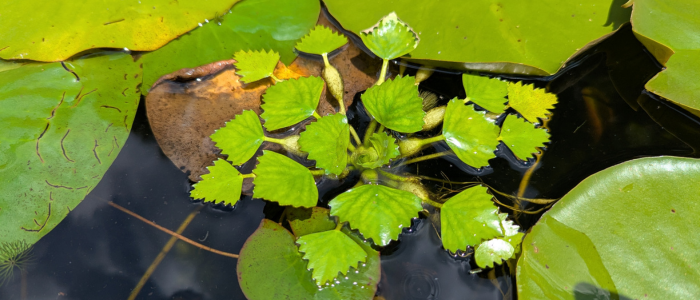
One example is water chestnut, a floating plant that forms dense mats across the surface of fresh water. What starts as a small patch of greenery can quickly take over an entire pond, blocking sunlight and lowering oxygen levels. Native plants struggle to grow, fish lose habitat, and suddenly a once-thriving waterway feels very different for wildlife and people.
Other species are harder to spot. The silty pond mussel, for instance, lives below the surface but can filter huge amounts of water, removing the tiny organisms that native species rely on for food. Over time, this can disrupt the entire food web and make it harder for native fish and imperiled native mussels to survive.
What makes invasive species especially challenging is how easily they spread. A small fragment of a plant can hitch a ride on a kayak or paddleboard. Mud stuck to a pair of boots or fishing gear can carry tiny organisms from one waterway to another. Even releasing aquarium plants or animals into the wild (something people sometimes do with good intentions) can introduce species that don’t belong.
Once these newcomers are established, they’re very difficult to remove. Control efforts are expensive and complicated, and in some cases, it’s simply not possible to get rid of the intruders without also harming native plants and animals. Snakehead fish, for example, made their home in the Delaware River and its tributaries after being transported to a lake in the headwaters of the Mullica River. The New Jersey Department of Environmental Protection Division of Fish and Wildlife is working hard to eradicate them. If they don’t succeed, they could cause widespread damage – potentially threatening the entire native fish community of the Pine Barrens.
Why do these interlopers thrive here? Many of the most hazardous alien species in New Jersey come from the temperate zone of eastern Asia, which has a similar climate. They enter an undefended ecological system that lacks the native biological control agents – predators, parasites, and competitors – that keep them in check in their original ranges. Silty pond mussels from China were brought into both the Delaware and Raritan watersheds on the bodies of nonnative bighead carp raised in fish farms. Massive partnership efforts by nonprofit organizations and the state government to eradicate these mussels are underway but the chances of success are unclear.
As is so often the case, the earlier we catch a problem, the better. Removing a small patch of invasive plants is far easier than restoring an entire lake once they’ve taken hold. Likewise, eradicating an invasive species in a small stream can prevent it from colonizing downstream in rivers or lakes. An ounce of prevention is worth a pound of cure, as the saying goes…
Some of New Jersey’s aquatic invasives are fully submerged and impossible to get a hold of, like the rapidly growing plant hydrilla. In those cases, reducing the spread is less about getting into waders and clearing a pond and more about cleaning boats and gear when going between water bodies. Adopting a few new, simple habits and exercising increased awareness can save individual lakes, rivers, or even an entire network of waterways. Visit https://stopaquatichitchhikers.org/ to learn more.
The places we inhabit and enjoy are living systems with pieces and parts that evolved together for millennia! We need to make sure the rich diversity we have isn’t replaced by a few stealthy actors that dominate the playing field. The creation of a new Invasive Species Council under Governor Mikie Sherrill offers a hopeful sign. Reestablished at the start of the year when former Governor Phil Murphy signed the Invasive Species Management Act, the newly forming council signals that New Jersey may turn some attention to addressing invasive species on a much larger scale. And thank goodness because the sooner we get on this in a more comprehensive way, the better!
To learn more about preserving New Jersey’s land and natural resources, visit the New Jersey Conservation Foundation at www.njconservation.org or contact info@njconservation.org.
About the Authors
Alison Mitchell
Executive Director
Michele S. Byers
Executive Director, 1999-2021
John S. Watson, Jr.
Co-Executive Director, 2022-2024
Tom Gilbert
Co-Executive Director, 2022-2023
View their full bios here.
Filter
Get The Latest News
From The Garden State
In the
News