


The State We're In
A sad fate for suburban and urban trees
By Alison Mitchell, Executive Director, New Jersey Conservation Foundation
Across towns and cities, the trees that define our neighborhoods, cool our homes, and help tie our landscapes together are disappearing one construction project and “routine” removal at a time.
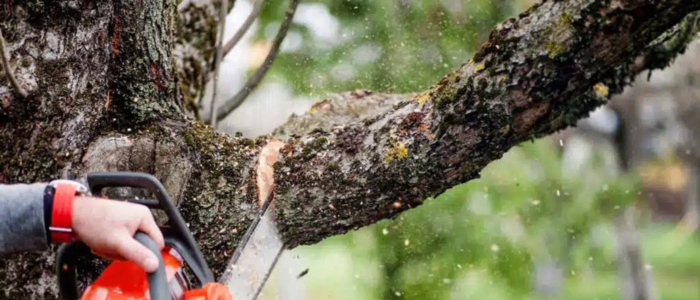
We need trees, yet every day they’re senselessly removed because they crack sidewalks or stand in the way of a new swimming pool. Homeowners are sometimes told by insurance companies that perfectly healthy trees are “hazards.” Due to fear of liability, falling limbs, and claims denied, our irreplaceable green giants are destroyed.
It’s death by a thousand cuts, and the cumulative impact is profound.
A 70-year-old maple will cool a suburban home on a summer afternoon, cutting energy bills dramatically. Trees intercept thousands of gallons of stormwater each year, easing pressure on our overworked drainage systems and mitigating soil erosion. They capture carbon, reduce noise pollution, stabilize soil, and are home to all sorts of beneficial wildlife. Without them, we lose critical mental and physical health benefits, and we starve the natural world. No tidy sidewalk or strip mall can replace those benefits. But in community after community, we treat mature shade trees as disposable obstacles.
New Jersey’s suburban landscapes give the illusion of abundance. There’s plenty of greenery – lawns, shrubs, isolated street trees – and we assume the environment is thriving. But this green is deceiving. Nonnative, invasive ornamental plants dominate many neighborhoods; uniform lawns contribute nothing to biodiversity; and tree canopy coverage is shrinking in some of our most built-out suburban counties. We’re losing the big, ecologically valuable trees that anchor the entire system – and the summer temperature moderation they provide.
Climate change makes the situation even more precarious. Stronger storms take down weakened or isolated trees that lack the protection of a robust canopy network. Hotter, drier summers stress species already threatened by often fatal alien insect pests and imported bacterial and viral pathogens. And longer drought seasons dry out trees and make their root systems vulnerable.
To stem this spiral, municipalities must adopt stronger tree-protection ordinances. A single development can erase a century of growth in one day. Local governments should require protection of existing mature trees in communities and meaningful replacement ratios with diverse native plantings whenever possible.
Homeowners need guidance and incentives to maintain mature trees rather than getting rid of them. Too many removals begin with a misunderstanding of what constitutes risk. We need to work together to save healthy trees, not be forced by often well-intentioned towns and insurance companies to cut them down without proper assessment. Ironically, we’ve witnessed a surge in tree-removal recommendations for rooftop solar panels – sacrificing shade and carbon uptake that takes decades to generate in an effort to gain a bit of solar energy. Rooftop solar has its place in the clean energy shift, but not at the expense of trees.
We can approach replanting as a generational investment rather than a quick aesthetic fix. Choosing native species, planting in clusters rather than isolated rows, and giving young trees proper soil and space are critical for ensuring suburban canopy for the next 50 to 100 years.
We need a cultural shift where we stop seeing trees as threats and start seeing them as the infrastructure they truly are.
Look up tree planting initiatives in your town or nearby cities and get involved. Scrutinize decisions to remove trees by municipalities, utilities, and insurance companies. Of course, some present a true hazard to be addressed, but many of those being felled do not. We’re the Garden State and caring for our trees calls for informed action. Let’s not let our many healthy trees go down without a fight!
To learn more about how you can help preserve New Jersey’s natural resources, visit the New Jersey Conservation Foundation at www.njconservation.org or reach out to us at info@njconservation.org.
About the Authors
Alison Mitchell
Executive Director
Michele S. Byers
Executive Director, 1999-2021
John S. Watson, Jr.
Co-Executive Director, 2022-2024
Tom Gilbert
Co-Executive Director, 2022-2023
View their full bios here.
Filter
Get The Latest News
From The Garden State
In the
News