


The State We're In
Lifting the fog on mosquito spraying
By Alison Mitchell, Executive Director, New Jersey Conservation Foundation
Each summer, humans reignite their war with mosquitoes. And who can blame us? These pests deliver irritating bites and, in some cases, can carry diseases. Many towns and residents try to escape these buzzing nuisances by spraying insecticides – often referred to as “fogging.” Unfortunately, all that spraying doesn’t actually solve the problem, and worse, it decimates populations of other insects we’re trying to protect.
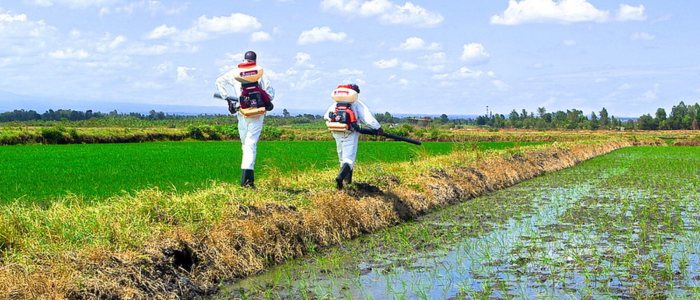
There are two common forms of mosquito fogging, both rely on compounds known as pyrethrins or pyrethroids. The first is performed by trucks spraying a fine mist into the air, which knocks down every insect that happens to fly through the cloud that is created. The second is barrier spraying that coats vegetation, fences, and homes with a residue, often applied by backpack sprayers.
The sprayed mist dissipates relatively quickly, but not before it kills butterflies, moths, bees, ants, and other essential insects. Barrier sprays persist much longer. University of Delaware professor Doug Tallamy, an entomologist, ecologist, and best-selling author, has extensively studied the effects of mosquito spraying on insect populations and the environment. In one of his studies, residues remained lethal to non-target insects for at least 30 days, even after exposure to sunlight and more than two inches of rainfall. Pest control companies are often hired to reapply monthly, which means continuous deadly exposure without discrimination.
Studies show that these sprays kill insects at every life stage, from eggs to adults, including caterpillars that form the base of animal food webs. “Saying it only kills mosquitoes is blatant false advertising,” says Tallamy.
The end result of this chemical quest is the disappearance of the beneficial insects that sustain life around us, and the species that eat them. “You’re not going to have any breeding birds. You’re not going to have lightning bugs. You’re not going to have any pollinators,” says Tallamy.
Ironically, despite the damage it causes, according to Tallamy, there’s no evidence anywhere that spraying adult mosquitoes actually regulates their populations over time. While it kills a portion of individual insects, it leaves enough behind for populations to quickly rebound. This approach has homeowners and municipalities locked into a costly ongoing cycle of spraying that doesn’t deliver meaningful returns.
Fogging recently gained more momentum because of public concern over diseases like Zika virus, even in places where the virus was never present. But what began as an emergency response has since become a booming industry, fueled by fear and the promise of convenience.
There are 63 known mosquito species in this state we’re in. Non-native species, like the Asian tiger mosquito, are problematic but for native mosquitoes and their larvae, which play an important role in the ecosystem, thoughtful management rather than total annihilation should be the goal.
Tallamy argues that we have to learn to live with mosquitoes – in part because complete control is unrealistic!
He suggests several effective methods to avoid mosquitoes or reduce populations without harming other species, like using a fan while sitting outdoors since mosquitoes can’t fly through the breeze. Wearing long sleeve shirts, hats, and using bug repellent for outdoor activities like hiking or kayaking can be very effective. Maintaining gutters and ditches and not allowing stagnant water to accumulate in containers in your yard is also key.
You can create a small water source in your outside space that attracts egg-laying mosquitoes, then treat it with “mosquito bombs,” a naturally occurring bacterium you can buy at the store that kills only mosquito larvae and spares other harmless insects.
This is one problem where individuals can play an important role since our yards and our communities collectively add up to millions of acres! The stakes are high. Insect and bird populations are rapidly declining, pushing us closer towards species extinction and loss of biodiversity. So this summer, rather than destroying the natural systems we depend on, let’s consider the larger picture and the broader risks, and step back from all of the spraying.
To learn more about preserving New Jersey’s land and natural resources, visit the New Jersey Conservation Foundation at www.njconservation.org or contact info@njconservation.org.
About the Authors
Alison Mitchell
Executive Director
Michele S. Byers
Executive Director, 1999-2021
John S. Watson, Jr.
Co-Executive Director, 2022-2024
Tom Gilbert
Co-Executive Director, 2022-2023
View their full bios here.
Filter
Get The Latest News
From The Garden State
In the
News