


The State We're In
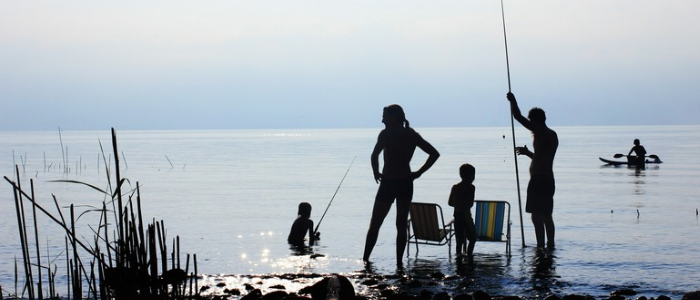
Connecting to nature through fishing
By Alison Mitchell, Executive Director, New Jersey Conservation Foundation
On any summer morning along New Jersey’s coast, you’ll find people casting lines from the surf, dropping bait from small boats, or simply standing at the water’s edge, waiting. Fishing here is a tradition, a livelihood, and can be a way for people to learn about and come to care for the environment.
“Natural resources are finite,” says Greg Cudnik, Long Beach Island native, charter captain, and second-generation manager of Fisherman’s Headquarters – a bait-and-tackle shop in Ship Bottom. “There’s not an endless supply of fish in the sea. There’s not an endless supply of clean water.”
Cudnik notes that he has witnessed changes echoing throughout the larger fishing community right now about the loss of Atlantic menhaden, a key species in our coastal ecosystem. Menhaden are small bait fish that support larger fish, mammals like whales and dolphins, and even birds. Concern is growing over large-scale industrial fishing operations that remove hundreds of millions of menhaden annually, processing them into low-value animal feed and oil.
In New Jersey, coastal ecosystems abound. From tourism and local economies to beloved wildlife, our rivers, freshwater and saltwater wetlands, and ocean are some of the most unique and defining aspects of our state.
We’re a small state and our coast is heavily managed. Cudnik points to beach replenishment, or large-scale projects that add sand to shorelines, as one of the biggest challenges facing local fisheries. While designed to rebuild lost beaches and infrastructure, “we’re destroying the essential fish habitats,” he says, describing how sand movement buries the structures and organisms that support marine life. Small creatures like clams and crabs disappear, and with them, the forage that larger fish depend on. “Everything is tied together,” Cudnik notes.
Yet alongside challenges, fishing continues to offer something increasingly rare: a direct connection to the natural world, and to the food it provides. As Cudnik puts it, families who fish here are “enjoying the bounty of the Jersey Shore.” Whether clamming in the bay, crabbing off a dock, or catching fish to bring home for dinner, people are participating in a tradition of wild food that goes back centuries.
In a time when many are disconnected from nature, fishing offers an exciting summer outlet. “Everyone’s plugged in,” Cudnik says. “It’s good for kids to unplug.” Fishing, like other outdoor activities, slows things down. It teaches patience and observation. It also creates lasting memories, like that first catch, and a meaningful relationship to water.
“All walks of life…any age category can go fishing,” Cudnik says. A simple hand line, a hook, and a piece of bait can be enough to get started!
Environmental stewardship lives in the hands of the people, and in this case, people who rely on these waters and who want to see them thrive for generations to come can be a voice for conservation. Cudnik’s observations on the moon and tides, or what fish is running this season, reflects a deep respect for balance, limits, and conservation.
And his enthusiasm for teaching kids about fishing sustainably is compelling since today’s young can become tomorrow’s advocate for clean water, healthy fish populations, and responsible coastal management.
To fish in saltwater, individuals 16 and older must register – it’s free and required. Visit https://dep.nj.gov/njfw/fishing/marine/saltwater-registry/ to learn more. For freshwater fishing (including privately owned waters), anyone age 16 and older must purchase a license with handline, rod and reel or with a bow. To fish for trout or salmon requires a trout stamp. Learn more at https://dep.nj.gov/njfw/fishing/freshwater/buy-a-license/.
To learn more about preserving New Jersey’s land and natural resources, visit the New Jersey Conservation Foundation at www.njconservation.org or contact info@njconservation.org.
About the Authors
Alison Mitchell
Executive Director
Michele S. Byers
Executive Director, 1999-2021
John S. Watson, Jr.
Co-Executive Director, 2022-2024
Tom Gilbert
Co-Executive Director, 2022-2023
View their full bios here.
Filter
Get The Latest News
From The Garden State
In the
News