

The State We're In
Hope for forests, food for families
By Alison Mitchell, Executive Director, New Jersey Conservation Foundation
For more than 20,000 years, people have hunted deer for food in North America. Today, in New Jersey, responsible, regulated hunting provides a valuable source of local protein to hunters’ families, friends, and food-insecure residents, while helping to protect forests.
In many places around this state we’re in, deer populations are 10 times above healthy levels, and forests are tragically losing their natural diversity and vitality. This is not the fault of the animals. They are responding to a landscape profoundly changed by human activity.
Humans eliminated the primary predators for deer in the eastern United States, including wolves and mountain lions. Agriculture and suburban development began to carve up forests, creating ideal habitat for deer that flourish at the edge of the woods. A greater abundance of food, coupled with fewer hunters, limited hunting opportunities in populated areas, and milder winters, has led to a surge in deer numbers.
The impact of deer overabundance can be devastating to forests. Woody native tree seedlings (such as oaks and hickories) and beautiful native understory trees, shrubs, and wildflowers disappear under heavy browsing, outcompeted by invasive plants that aren’t appealing to deer.
The loss of native plants in turn drives a decline in forest songbirds, pollinators, and many other kinds of animals. Deer-vehicle collisions and crop damage further add to the challenges communities face from extreme deer overabundance.
Properly managed hunting can be an important component of a deer management program to reduce populations that have grown beyond what the landscape can support, and beyond what is healthy for deer herds themselves.
It also connects conservation benefits to healthy food for families, including the nearly one million New Jersey residents – including 270,000 children – facing food insecurity.
Hunters Helping the Hungry (HHH) was founded in the late 1990s after New Jersey legalized venison donations to food banks. And public demand for venison is high. Locally sourced deer meat can’t be sold commercially here, but New Jersey is estimated to import over 100,000 pounds of farmed venison each year from New Zealand and Australia, some 8,000 miles away.
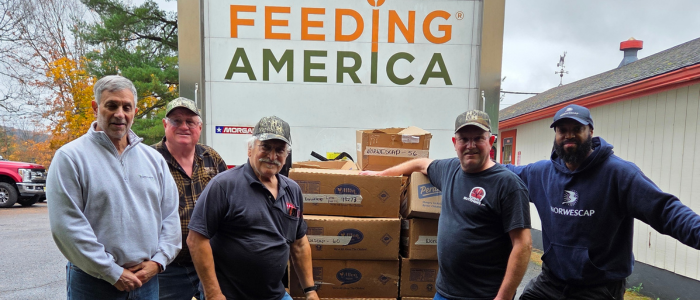
Thornton Giese, whose father founded HHH, says the organization distributes about 40,000 pounds (160,000 servings) of venison annually, donated by individual hunters as well as through municipal programs. The organization coordinates with state-inspected butchers, arranges refrigerated transport, and covers processing costs so hunters can donate without paying out of pocket. “The venison’s the first thing that is empty at the food bank. That’s what people want,” says Giese.
The contributions add up. Sam Lebowitz, who founded Veteran Conservation Hunters, estimates that an average deer yields about 50 pounds of meat, or roughly 200 meals. Even with a relatively small group of hunters, primarily using bows, his organization donated one and a half tons of venison last year. For him, sharing is part of the point.
State regulations vary by location, reflecting different local deer populations and conditions. Learning those rules and the practical skills of hunting and handling meat can be daunting for newcomers. Both organizations offer mentorship to new hunters. Veteran Conservation Hunters grew from Lebowitz’s own experience with a mentor, which he later turned into an ongoing program where experienced hunters help veterans learn, participate, and eventually mentor others.
“We also partner with municipalities and land trusts on deer management, and on stewardship,” says Lebowitz. The group’s work includes invasive-plant removal and native planting.
Giese understands the connection between deer and forests and believes hunting can help people better understand the natural systems around them, and take an active role in protecting them.
When supported by science, responsible hunting can be an important part of the solution to restore New Jersey’s habitats for wildlife and the future, and feed people in need.
Visit https://www.huntershelpingthehungry.org/ and https://www.veteranhunters.org/ to learn more. For more information on deer stewardship, visit http://www.deernj.org/.
To learn more about preserving New Jersey’s land and natural resources, visit the New Jersey Conservation Foundation at www.njconservation.org or contact info@njconservation.org.
About the Authors
Alison Mitchell
Executive Director
Michele S. Byers
Executive Director, 1999-2021
John S. Watson, Jr.
Co-Executive Director, 2022-2024
Tom Gilbert
Co-Executive Director, 2022-2023
View their full bios here.
Filter
Get The Latest News
From The Garden State
In the
News