


The State We're In
Winter visitors from the top of the world
By Alison Mitchell, Executive Director, New Jersey Conservation Foundation
Every winter, New Jersey’s fields, marshes, and reservoirs host a familiar cast of large waterfowl. Resident Canada geese are joined by populations from farther north, along with hundreds of thousands of snow geese with their stark, high-contrast black and white plumage.
In recent years, something unexpected has been happening among these flocks. Careful observers have been finding geese that don’t appear on the usual checklists. These birds are considered “vagrants” and their presence in New Jersey is both exciting and instructive.
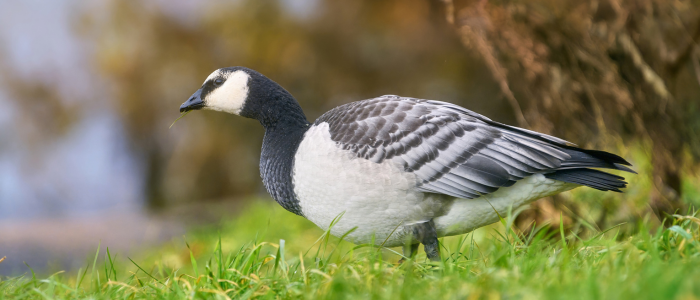
In birding terms, a vagrant is a bird found well beyond where field guides say it “should” be. Black and white faced “barnacle geese” normally breed in high Arctic regions from Greenland to Siberia and winter mainly in northern Europe. Pink-footed geese, sporting rosy legs and bills, breed in Greenland and Iceland and winter almost exclusively overseas. Greater white-fronted geese, marked by their speckled bellies, are more familiar to North America, but most winter west of the Mississippi or along the Gulf Coast, not in the Mid-Atlantic. Yet a small number of these species are turning up in New Jersey!
Why are they here? The answer is likely a combination of forces that highlight how dynamic bird migration really is. Some birds may be pushed off course by storms during fall migration. Others may simply make navigational errors, especially young birds migrating for the first time. In some cases, individuals appear to follow the “wrong” flock, imprinting on a different species’ migratory route and continuing that pattern year after year. Population growth in Arctic breeding areas may also play a role, increasing the odds that a few birds will explore outside of traditional flyways.
Climate change adds another layer. Arctic regions are warming faster than almost anywhere else on Earth, altering the timing of snowmelt and foraging opportunities. As conditions shift, birds respond by adjusting migration schedules, shortening journeys, or testing new wintering areas. A barnacle goose lingering in New Jersey may not be lost so much as experimenting, taking advantage of mild winters and abundant food. These vagrants offer a glimpse into how some species may adapt as the climate continues to change.
For birders, the appearance of these geese is thrilling. News of a barnacle or pink-footed goose spreads quickly! People bundle up and travel across county and state lines to stand at the edge of a field, scanning flocks through binoculars. These moments connect people to the natural world in the quietest months of the year, when outdoor engagement can otherwise wane. Every sighting documented by a birder becomes information that helps scientists track changes in migration, distribution, and frequency over time.
From a conservation perspective, these Arctic visitors underscore the importance of New Jersey’s landscapes. Coastal marshes, reservoirs, fields, and farmland provide critical winter habitat for rare travelers from distant lands – sometimes thousands of miles away. Protecting these places ensures that New Jersey remains a refuge. It also reminds us that conservation is inherently global: what happens in Arctic breeding grounds and European wintering areas is connected to what we protect here at home.
To learn about preserving New Jersey’s land and natural resources, visit the New Jersey Conservation Foundation website at www.njconservation.org or contact me at info@njconservation.org.
About the Authors
Alison Mitchell
Executive Director
Michele S. Byers
Executive Director, 1999-2021
John S. Watson, Jr.
Co-Executive Director, 2022-2024
Tom Gilbert
Co-Executive Director, 2022-2023
View their full bios here.
Filter
Get The Latest News
From The Garden State
In the
News