


The State We're In
A better education is rooted in nature
By Alison Mitchell, Executive Director, New Jersey Conservation Foundation
Nowadays, children and young adults are mostly indoors, glued to screens for school and “social life”. Research suggests it is taking a toll on their mental health, with experts pointing to correlations between screen time and anxiety and depression.
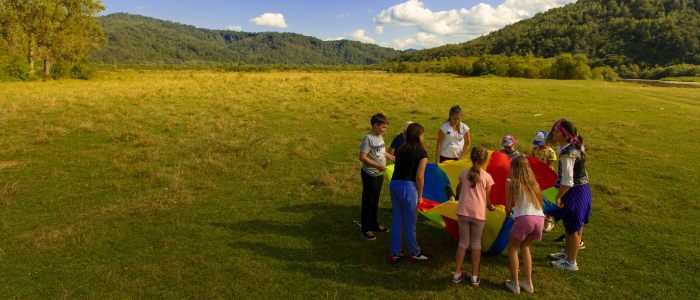
Dr. Patricia Shanely, co-founder of Forest and Climate Training (FACT), as well as Woods & Wayside International, believes the solution is both straightforward and transformative: reconnect kids with nature. Research shows that time in nature lowers stress and restores focus for kids, while also fostering empathy for other living things.
Youth today are “sensory deprived,” cut off from the full-body, emotional, and social benefits of being outdoors. “Anybody who walks into the woods feels better,” Shanley says. “Worries go away.”
In the classroom, technology has taken over and education continues to drift away from the natural world. In the 1940s, nature was taken out of curriculums and replaced with standardized testing and lab-based learning. Experiences like observing flowers or picking berries have been reduced to abstraction. The result is what researchers are calling an “extinction of experience,” where students graduate with little direct knowledge of the ecosystems around them.
From clearing invasive plants that crowd out our native species to rewriting curriculums, Shanley is reimagining learning as something that happens beyond the classroom and connects local and global initiatives – and she’s leading by example, regularly taking high school students into the woods and training them to restore ecosystems with grammar school youth. By uniting nonprofits, schools, and state agencies, her efforts aim to create a statewide youth environmental stewardship service to support the 50 x 50 movement to conserve 50% of New Jersey’s land and waters by 2050.
In her vision, educators integrate outdoor, experiential learning, supported by a 50-hour community service requirement that offers high school students meaningful, place-based opportunities. Along with advancing supportive state policies and the possibility of reviving the Youth Conservation Corps – a cost-effective way to boost public health and restore forests – these steps aim to swap screens for soil, getting kids’ hands back in the dirt.
The erosion of contact with nature coincides with unprecedented levels of diminishing biodiversity globally. Here in New Jersey, forests essential to the health of communities and ecosystems are in decline due to invasive species, fragmentation, and extreme weather. Understanding those challenges and the role youth can play in mitigating harm is where Shanley’s work shines.
When children engage in stewardship and care for local land, they begin to see themselves as part of the broader solution. Nature-based education builds purpose. Shanley notes that the energy of teens is particularly suited to this focused, labor-intensive work.
The state’s climate curriculum is the first of its kind in the nation, but it needs to be more hands-on. Nature exposure cannot remain an occasional field trip or extracurricular activity. It must be woven into the fabric of learning, from classrooms to after-school programs to community service requirements.
The task may feel daunting to educators whose training hasn’t included ecology or other environmental sciences, but in this case, details are not as important as the larger experience. “The teachers do not need to know species names,” Shanley emphasizes. “All they need to do is let the kids go outside and explore.”
This approach must include urban communities, where access to nature is often limited but still present. Shanley’s work shows that seemingly small encounters with wild plants in city landscapes can spark curiosity, joy, and healing.
Responsibility cannot fall on schools alone. Parents, educators, and community members must step up to help rebuild the bridge between younger generations and the natural world. There is a short window of opportunity while adults who grew up spending time in nature can still pass on that knowledge and sense of wonder.
As Shanley puts it, this is a “vastly underutilized” solution – one that can restore young minds and ecosystems at the same time. “You have to love where you are to really save it,” she says.
Let’s prepare young people to face climate change, ecological uncertainty, and species extinction by fostering knowledge and the inspiration to respond. Through education and experience, we can reconnect young people with the natural world, and in so doing, help secure their mental and physical well-being, and their future.
Explore FACT at https://www.fact-forests.org/ and visit Ridgeview Conservancy to learn about their work connecting youth with nature: https://www.ridgeviewconservancy.org
To learn more about preserving New Jersey’s land and natural resources, visit the New Jersey Conservation Foundation at www.njconservation.org or contact me at info@njconservation.org.
About the Authors
Alison Mitchell
Executive Director
Michele S. Byers
Executive Director, 1999-2021
John S. Watson, Jr.
Co-Executive Director, 2022-2024
Tom Gilbert
Co-Executive Director, 2022-2023
View their full bios here.
Filter
Get The Latest News
From The Garden State
In the
News