


The State We're In
Why we love the mourning dove
By Alison Mitchell, Executive Director, New Jersey Conservation Foundation
The mourning dove is one of the most abundant bird species in North America, and its gentle “coo” is familiar to millions of people. For many New Jerseyans, mourning doves are as much a part of daily life as the rustle of leaves or the hum of distant traffic. But these dependable neighbors deserve more than a passing glance. As one of the state’s most common birds, they offer a stable connection to our natural surroundings and make a meaningful contribution to the ecosystems upon which we depend.
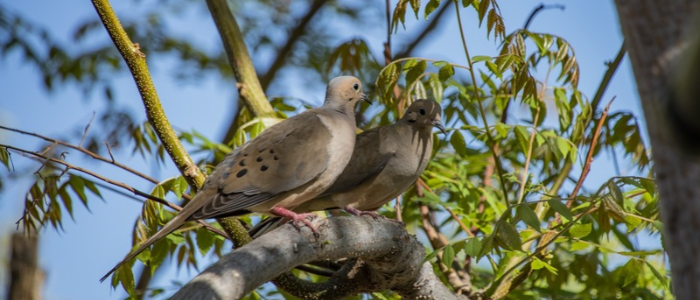
The mourning dove’s understated beauty and calming presence have long made it a symbol of peace and reflection. Their soft gray plumage, delicate black spots, and graceful flight – often punctuated by a distinctive whistling of wings – bring moments of grace to our otherwise busy lives. For generations, people have associated the dove’s echoing “coo” with both loss and comfort. In a fast-paced world, mourning doves remind us of the serenity that often surrounds us in the natural world.
Studies have consistently shown that everyday interactions with wildlife can reduce stress and improve mental well-being. In densely populated states like New Jersey, where access to large natural areas can be limited, common species maintain that vital link between people and nature.
Beyond their cultural and emotional significance, mourning doves are also important ecological players. They belong to the family Columbidae and are closely related to the rock dove, also known as the common or rock pigeon. Mourning doves breed from southern Canada throughout the continental US into Mexico, Bermuda, the Bahamas and Greater Antilles, and in scattered locations in Central America. Although mourning doves winter throughout much of their breeding range, the majority head to the southern U.S., Mexico, and south through Central America to western Panama.
As ground feeders, they consume large quantities of seeds, including those from grasses and weeds. These seeds are dispersed through their droppings, influencing where plants grow in fields, parks, and urban green spaces. Mourning doves are a prey species for a variety of native predators, including hawks and falcons, supporting the stability of those populations. When we protect common species like the mourning dove, we also support the broader network of life that depends on them.
Despite their abundance, mourning doves face challenges, like many bird species. Pressure from habitat loss, window collisions, pesticide use, and climate change are threats to these gentle creatures. While they have shown remarkable adaptability, resilience is not the same as invulnerability.
Simple steps we take can make a meaningful difference: preserve habitat, reduce pesticide use, make windows more bird-safe, and support local conservation initiatives. Even responsible maintenance of bird feeders and water sources can provide critical support, especially during extreme weather conditions.
Threatened and endangered species understandably receive much of our attention. But when we take the time to notice and care for common species, we strengthen the foundation of conservation itself. Effective wildlife conservation requires safeguarding the familiar plants and animals and natural experiences that connect people to place and contribute to thriving ecosystems.
As you hear the soft call of the mourning dove in the late afternoon, remember the story of resilience and ecological balance that it tells. Protecting these native birds allows future generations to experience the same magical moments of wonder that have long defined our relationship with nature.
To learn more about preserving New Jersey’s land and natural resources, visit the New Jersey Conservation Foundation at www.njconservation.org or contact info@njconservation.org.
About the Authors
Alison Mitchell
Executive Director
Michele S. Byers
Executive Director, 1999-2021
John S. Watson, Jr.
Co-Executive Director, 2022-2024
Tom Gilbert
Co-Executive Director, 2022-2023
View their full bios here.
Filter
Get The Latest News
From The Garden State
In the
News