


The State We're In
Federal actions threaten New Jersey whales, sea turtles, and much more
By Alison Mitchell, Executive Director, New Jersey Conservation Foundation
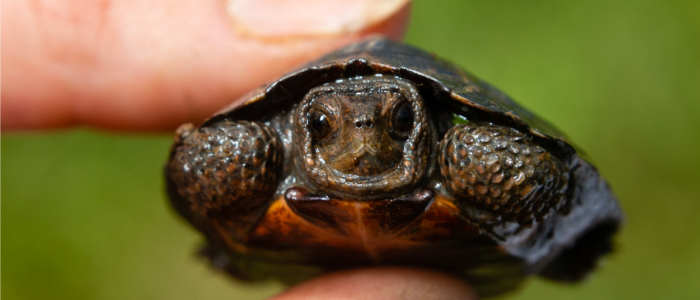
Photo – Bog Turtle (c) Will Parson/Chesapeake Bay Program
New Jersey has been a leader in protecting the species and ecosystems that make our state unique. But we can’t escape the toll that the Trump administration’s recent rollback of Endangered Species Act (ESA) protections will take here in New Jersey.
By weakening critical protections and the longstanding definition of “harm” under the ESA, the administration has created new threats for imperiled wildlife already under enormous pressure from human activities. For some of those species, time is running out.
The importance of habitat for our country’s most vulnerable plants and animals has long been established in science and law, yet habitat loss remains one of the leading drivers of extinction. As a result, more than one-third of plant and animal species across the United States are at risk of extinction, with many struggling to find the places they need to survive.
The definition of “harm” in the ESA used to recognize that actions do not need to kill wildlife to threaten their survival – destroying or degrading the environments that species rely on can be just as damaging. However, the Trump administration just finalized a new rule that changes the regulatory definition of “harm” to exclude habitat. For example, noise pollution from underwater blasting for offshore drilling would normally be considered “harm” to a pregnant whale if that noise surpassed a certain decibel. But now, depending on how strictly the new rules are interpreted, activities outside of directly killing a whale may not be regulated.
Without that broader protection, damaging activities put vulnerable species at greater risk, opening the door to widespread destruction of habitat from logging, mining, oil and gas drilling, and other development.
While a larger range of threatened and endangered species are recognized under state law, New Jersey is home to several federally protected species that benefit from the ESA. Critically endangered North Atlantic right whales migrate through our coastal waters, where ship strikes and noise pollution pose constant threats. The population of these whales is critically low, with fewer than 360 individuals remaining, and only around 70 breeding females left. There are also endangered sea turtles – including loggerheads and leatherbacks – that rely on these same waters to feed and travel.
Federal protections are especially important for our ocean wildlife because many of these species rely on habitats beyond our state jurisdiction. Ocean dwellers in New Jersey spend significant portions of their lives migrating, feeding, and reproducing in federal waters farther off the coast. While the state plays an important role in protecting its coastal resources, we cannot safeguard species that travel across vast ocean areas without strong federal safeguards.
New Jersey’s wetland regulations and other land-use protections do provide a critical lifeline for species like piping plovers nesting on our sandy beaches and red knots that rely on the Delaware Bay as a vital stopover during migration. For the federally endangered bog turtle, New Jersey’s freshwater wetland protections – the strongest in the nation – provide one of the species’ best remaining chances to recover. Maintaining and strengthening these safeguards is all the more essential as the federal government undermines the ESA. But they aren’t enough.
The new federal rules allow private interests to challenge habitat protections by claiming economic harm. Industries are pushing for the right to destroy the places wildlife need to survive while they profit financially. For example, the government could now decide against protecting an endangered species after considering lost revenue from prohibiting a golf course or hotel development to be built where the species lives.
Conservation groups, including the Center for Biological Diversity, Earthjustice, and other nonprofit organizations have announced plans to challenge the Trump administration’s rule changes in federal court, arguing that they undermine the core purpose of the ESA. These organizations have a long track record of defending wildlife through legal challenges when federal agencies fail to do so.
You can help by urging your representatives in Congress to step in and defend the Endangered Species Act and ensure that the nation’s most vulnerable species are not sacrificed for short-term and short-sighted interests.
To learn more about preserving New Jersey’s land and natural resources, visit the New Jersey Conservation Foundation at www.njconservation.org or contact info@njconservation.org.
About the Authors
Alison Mitchell
Executive Director
Michele S. Byers
Executive Director, 1999-2021
John S. Watson, Jr.
Co-Executive Director, 2022-2024
Tom Gilbert
Co-Executive Director, 2022-2023
View their full bios here.
Filter
Get The Latest News
From The Garden State
In the
News