

The State We're In
So much depends on the Delaware
By Alison Mitchell, Executive Director, New Jersey Conservation Foundation
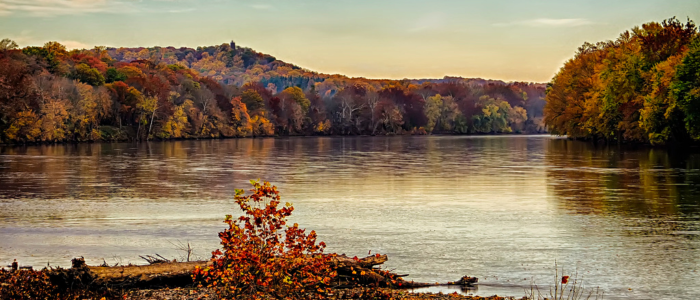
Formed during the last half-billion years by unrelenting water slicing through ancient mountains, the beautiful Delaware River makes up the entire western border of our state.
The longest free-flowing (undammed) river in the Eastern United States, this generally tranquil natural treasure is a tremendous resource with a rich history.
What may at first seem like a single river is actually a lifeline for communities and ecosystems across a much larger geography.
The river is the main waterway but the basin includes all the land, streams, and groundwater that feed into the river, stretching across New Jersey, Pennsylvania, New York, Delaware, and beyond. The basin is the entire system that makes the river, and all it provides.
“The Delaware River Basin is only 0.4 percent of the United States landmass but serves 4 percent of the population,” says Amanda Khalil, Water Resource Scientist for the Delaware River Basin Commission (DRBC), a regional body tasked with managing the river system without regard to political boundaries. For such a small footprint, the basin has an outsized role. The Delaware supplies water to over 14 million people, including many who don’t live near her banks. In fact, water from the basin is exported to places like central and northern New Jersey. Even New York City gets half its water from the Delaware River!
Some of that ends up in our kitchen sinks. But a massive share (around 3.5 billion of the 6 billion gallons drawn daily) goes toward generating electricity. “That large water use creates power not just for folks in the basin,” Khalil explains, “but people all throughout the regional electric grid,” powering our phones, lights, and morning coffee makers.
The river’s value goes way beyond providing water for human use. The basin is a biodiversity haven that hosts some of our state’s most unique habitats with thousands of species, including rare birds, reptiles, amphibians, fish, plants, insects, and other invertebrates. Sturgeon – prehistoric fish that have been around since the time of dinosaurs – still make their home in the river near our capital city of Trenton.
What happens upstream always affects what happens downstream, and the river is interconnected with our coastal ecosystems and greater landscape. Before it empties into the ocean in south Jersey, the Delaware throws one of the most awe-inspiring seasonal parties in the region: the spawning of many thousands of iconic horseshoe crabs. “It’s truly an amazing sight,” says Khalil about this fascinating and ancient phenomenon.
The federal government has long recognized the importance of the this precious waterway. In 2000, the National Wild and Scenic River System incorporated key segments of the lower Delaware, which helps safeguard the system from overdevelopment and pollution, brings in critical funding for management, and helps highlight the importance of this critical waterway. These protections allow people from far and wide to enjoy kayaking, fishing, swimming, and recreating in the river’s winding waters and scenic landscape.
The Delaware offers tremendous bounty, but she has her limits. Right now, one of the biggest stressors on the system is drought. After a long dry stretch starting in late 2024, the basin is still catching up. “If you think of the river like an accounting firm,” Khalil says, “it’s like there’s not enough money coming in…and we’re paying everyone by giving them allocations of water.” When the “income” (rain) really slows down, the math gets tricky…fast.
Additional challenges include climate change that impacts the river’s oxygen levels and essential species, pollution, and shifting energy demands, like water usage from data centers. Still, there’s some good news. By many measures, the Delaware is cleaner today than she’s been since the industrial era. Decades of collaboration between the four states have helped continue the recovery.
We often take nature’s contributions for granted! With so many species, including people and all sorts of wildlife, depending on the Delaware River basin, we need to better manage our demands to ensure it remains resilient.
Right now, the DRBC is developing its first-ever water resilience plan and wants to hear from you. This is a chance for residents to help shape how we protect and manage this vital resource for the future. Take the DRBC’s survey at https://form.jotform.com/
To learn more about preserving New Jersey’s land and natural resources, visit the New Jersey Conservation Foundation at www.njconservation.org or contact info@njconservation.org.
About the Authors
Alison Mitchell
Executive Director
Michele S. Byers
Executive Director, 1999-2021
John S. Watson, Jr.
Co-Executive Director, 2022-2024
Tom Gilbert
Co-Executive Director, 2022-2023
View their full bios here.
Filter
Get The Latest News
From The Garden State
In the
News