


The State We're In
Is the answer still “blowin’ in the wind”?
By Alison Mitchell, Executive Director, New Jersey Conservation Foundation
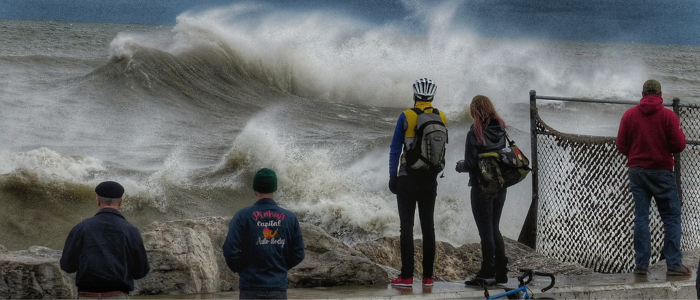
Is New Jersey getting windier? It’s something you may have read about recently or asked yourself if you spend a lot of time outdoors. It’s more than an academic question or a challenge for badminton players and golfers and figuring out the answer is more complex than you might think.
Wind, of course, is essentially air moving from one place to another, usually because of differences in atmospheric pressure caused by factors like temperature shifts or storm systems. When air moves to equalize the pressure between high- and low-pressure areas, it creates wind. The kind of increased wind we’re pondering here is during fair weather, not in the midst of a thunderstorm or winter blizzard. And while it may sound straightforward, measuring wind is anything but.
In this state we’re in, wind is primarily measured through the Rutgers New Jersey Weather Network. The network of stations uses tools called anemometers, which are instruments that measure wind speed and direction.
The state used to rely on measurements from weather stations at airports, such as Atlantic City and Newark, and the data wasn’t consistent. Now, with the Weather Network, we’re starting to get more solid information. David Robinson, the longest-serving state climatologist in the United States and a professor at Rutgers University, says that our network is finally maturing to the point where researchers can begin examining longer-term trends.
Our landscape is a diverse mix of coastal areas, agricultural vistas, Pine Barrens, ridgetop forests, and cities. So while we have weather stations in open fields and atop places like High Point Monument, we also have some that are in more sheltered spots with a lot of trees or buildings nearby. These obstructions can distort wind readings and make it harder to get an overall picture.
There’s another major measurement hurdle: time. Solid data only goes back about 20 years. As Robinson points out, “To truly track wind trends, we need at least 30 years of data.” Over short periods, it’s easy to mistake isolated stormy moments for a broader trend. “You forget the calm days, but you remember the days when your umbrella goes inside out,” he says.
Robinson stresses that we’re not going to solve this mystery overnight and we’ll need patience as the full picture emerges. Climatologists work on long timelines!
Why does it even matter if the state is breezier? In the summer, when there are high-pressure systems off the coast and low systems parked over Canada, we get extended droughts. Long periods of windy weather intensify droughts because they increase evaporation and fan the flames of wildfires. Wind can affect migratory birds, too. When we experience high winds, more birds are blown offshore during southbound migration. If they’re lucky, there might be a large ship to land on when they need to rest.
According to some experts, climate change may ultimately slow wind down. Wind is born from contrast – especially the temperature difference between the cold north and the warmer south. As the planet warms, the Arctic and other northern regions are heating up faster than areas farther south. As New Jersey’s climate becomes more like that of South Carolina, the temperature “tug-of-war” between north and south will weaken. With less contrast to stir things up, climate models suggest we could see a gradual dip in average wind speeds.
One thing is clear – changes in weather patterns have big consequences for natural systems and wind is an important dynamic to watch as the planet warms.
To learn more, visit https://climate.rutgers.edu/stateclim/?section=home&target=home.
To learn about preserving New Jersey’s land and natural resources, visit the New Jersey Conservation Foundation website at www.njconservation.org or contact me at info@njconservation.org.
About the Authors
Alison Mitchell
Executive Director
Michele S. Byers
Executive Director, 1999-2021
John S. Watson, Jr.
Co-Executive Director, 2022-2024
Tom Gilbert
Co-Executive Director, 2022-2023
View their full bios here.
Filter
Get The Latest News
From The Garden State
In the
News