


The State We're In
Life beneath the ice
By Alison Mitchell, Executive Director, New Jersey Conservation Foundation
When winter locks a pond or stream under a lid of ice, the surface goes still. But beneath that frozen cap, there is life!
Since ice is less dense than liquid water, it floats to the surface and insulates the slightly warmer water underneath. This phenomenon of a solid floating in its own liquid is virtually unique to H₂O. The insulation of deeper water is why lakes, larger ponds, and oceans never entirely freeze solid. It’s a darn good thing that ice doesn’t sink or even our oceans would have frozen solid long ago, and the earth would have turned into a giant, virtually lifeless ball of ice!
Instead, under its blanket of ice, water remains liquid, dark, and relatively stable, creating a refuge where fish, amphibians, insects, and microscopic life can wait out the cold.
Cold water lowers the metabolism of fish, which means they don’t need to move as much and need less food to survive. Many species drift into deeper water, conserving energy and living off fat reserves. As long as oxygen remains in the water, they can survive for months beneath the ice.
That oxygen exists in a delicate balance. Before the ice arrives, aquatic plants and algae produce oxygen through photosynthesis, and wind mixes it through the water. Once ice and snow block sunlight, oxygen levels slowly decline. In healthy systems, that decline is gradual enough for animals to endure. In polluted or nutrient-overloaded waters, however, oxygen can drop to dangerously low levels, leading to winter fish kills.
Some of the most impressive winter survivors are amphibians and reptiles. Painted turtles spend winter buried in the mud at the bottom of ponds. They don’t breathe air for months! Instead, they absorb tiny amounts of oxygen through their skin and slow their bodies to a near standstill. Wood frogs, common around New Jersey, are even more astonishing. They survive freezing temperatures on land by allowing their bodies to partially freeze. Their hearts and breathing stop until spring returns, when they thaw and immediately enter vernal pools to start breeding.
During slightly warmer, rainy nights in January and February, endangered tiger salamanders found in the pristine vernal ponds of South Jersey sometimes breed beneath the ice. When conditions are just right, one might even be lucky enough to observe them mating under a clear, glassy cover of ice.
Dragonfly and mayfly larvae remain underwater, insulated from extreme cold. Some produce natural “antifreeze” chemicals that prevent ice crystals from damaging their cells. These larvae are a crucial food source for fish and birds when spring arrives.
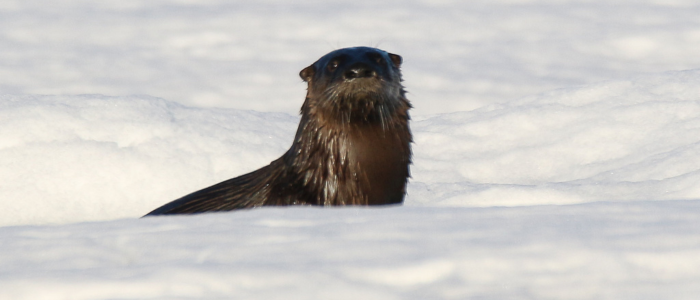
And ice sure doesn’t stop New Jersey’s water-loving mammals from enjoying winter’s bounty. Native North American river otters are well-equipped for the cold, with dense, waterproof fur that allows them to hunt in icy water. They can hold their breath for nearly 10 minutes, poking holes in the ice, which they maintain to access air, bring up food, and play.
Even organisms not visible to the naked eye, like bacteria and plankton, continue cycling nutrients beneath the frozen water, quietly maintaining the foundation of the food web. Without them, life above and below the surface would unravel.
As climate change drives more erratic winters – thinner ice, sudden thaws, and heavier runoff – these hidden ecosystems face growing stress.
This winter, when you pass a snow-covered pond or a stream sealed in ice, pause for a moment and consider that beneath that quiet surface, an entire community is enduring. How well it’s doing depends largely on the choices we make far from the water’s edge, all year long. We need to protect wetlands and headwaters, and reduce pollution if New Jersey’s waters are to remain alive through winter’s stillness for generations to come.
For more information about preserving New Jersey’s land and natural resources, visit the New Jersey Conservation Foundation website at www.njconservation.org or contact me at info@njconservation.org.
About the Authors
Alison Mitchell
Executive Director
Michele S. Byers
Executive Director, 1999-2021
John S. Watson, Jr.
Co-Executive Director, 2022-2024
Tom Gilbert
Co-Executive Director, 2022-2023
View their full bios here.
Filter
Get The Latest News
From The Garden State
In the
News