


The State We're In
Hold the line on New Jersey’s REAL rules
By Alison Mitchell, Executive Director, New Jersey Conservation Foundation
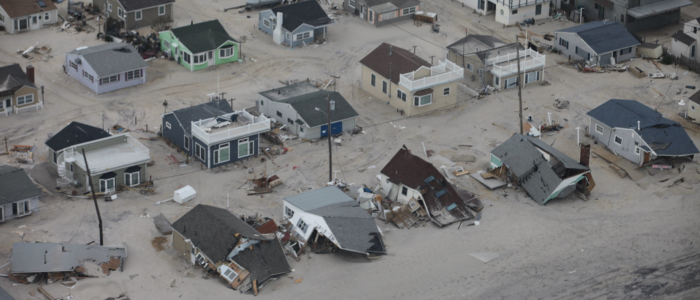
Photo: Aerial photo of damaged homes along New Jersey shore after Hurricane Sandy (c) Greg Thompson/USFWS
New Jersey’s Resilient Environment and Landscapes (REAL) rules protect our natural ecosystems and human societies. But confusion and misinformation have spread about the new standards, fueling calls to roll back these commonsense protections.
Will we start building for current and future flooding risks, or cling to old and outdated assumptions that put us in harm’s way and further damage the environment?
The REAL rules were adopted in January and are scheduled to go into effect in July. They update New Jersey’s development standards and align state rules with federal flood insurance guidelines in response to the growing impacts of climate change, including more intense storms and rising sea levels.
Studies show that by 2050, one in three public assets in New Jersey will be located in flood zones. This includes over 6,000 critical sites like schools, hospitals, water systems, fire stations, and parks. Across eight major cities, half of all public infrastructure is projected to fall within flood zones, with as much as 98 percent of Atlantic City’s public assets at risk.
Wetlands, tidal marshes, and riparian corridors need protection, too. The rules bolster protections for these areas, which safeguard systems that filter water, reduce flood impacts, and provide critical habitats supporting fish, birds, and other coastal wildlife.
The REAL rules strengthen stormwater management and promote nature-based projects that make the state more resilient– good news since natural solutions typically last longer and are less expensive than built approaches.
“The rules take our land use regulations, which have for many years assumed conditions weren’t changing, and bring them up to what is actually happening today – and anticipate what we expect to happen by 2100,” says Mike Pisauro, lawyer and policy director at the Watershed Institute. Pisauro, an environmental advocate for over 20 years, was part of the team that advised on the development and adoption of the REAL rules.
The science projects that sea level in New Jersey will rise by at least four feet by the end of the century. Because homes and other buildings constructed today often last for decades, the rules require new construction in flood-prone areas to account for future conditions.
Some opponents of the REAL standards claim that the sea level rise scenario underpinning the rules is unlikely, despite what current scientific modeling tells us. “There is an 83 percent chance that sea level will rise above four feet, so building to the new standards will be protective,” Pisauro clarifies.
Pisauro explains that routine home repairs and renovations are not affected by the rules and improvements do not necessarily trigger the new requirements. The rules focus primarily on new residential construction in flood zones. So, replacing the roof or updating your kitchen does not mean you have to elevate your house.
When rebuilding after major damage from natural disasters, it makes sense not to repeat past mistakes. Reducing future risk protects homeowner and public investments and keeps waterways clear of household plastics and chemicals that wash away in floods.
Yet, there is opposition from some residents, developers and local governments. Senator Nicholas Scutari (D-22nd) introduced a resolution in February claiming the rules are inconsistent with legislative intent and that the adoption process lacked adequate assessments.
Pisauro disagrees. “Very, very clearly, [the DEP] has the authority to do this,” he says. “It’s just wrong” to suggest otherwise.
Leaders including Governor Mikie Sherrill and other New Jersey lawmakers need to decide whether to uphold or weaken these protections.
Let’s build smarter, New Jersey. A clear and accurate understanding of the rules is key and can dispel misinformation. The DEP, Association of New Jersey Environmental Commissions (ANJEC), and the Watershed Institute regularly host webinars and information sessions. Visit https://thewatershed.org/
Standing firm on the new building standards under REAL ensures that New Jersey residents will be safer and better prepared for the storms ahead.
To review the facts about the REAL rules, visit https://dep.nj.gov/njreal/.
To learn more about preserving New Jersey’s land and natural resources, visit the New Jersey Conservation Foundation at www.njconservation.org or contact me at info@njconservation.org.
About the Authors
Alison Mitchell
Executive Director
Michele S. Byers
Executive Director, 1999-2021
John S. Watson, Jr.
Co-Executive Director, 2022-2024
Tom Gilbert
Co-Executive Director, 2022-2023
View their full bios here.
Filter
Get The Latest News
From The Garden State
In the
News