

News
Land preservation project is a win for conservation and clean energy
Dec 11, 2025
OCEAN COUNTY, N.J. — A 92-acre forest at the northern edge of the Pinelands National Reserve was almost cleared to make way for a solar field before conservation organizations stepped in to halt the plans and offer a win-win alternative. The result after years of collaboration: a unique land preservation project that supports clean energy while also protecting vital natural resources.
Six Flags Great Adventure, an amusement park in Jackson Township, planned to build a solar field in the forest around the park to meet its energy needs. The catch? It was slated to come at the cost of at least 18,000 trees. That’s where a coalition of conservation organizations intervened and ultimately secured landmark conservation easements that now protect 257 forested acres owned by the park from being developed, including wetlands at the headwaters of the Toms River — the largest and most ecologically vital tributary feeding Barnegat Bay. A conservation easement is a legal agreement with the landowner to ensure the permanent protection of a property.
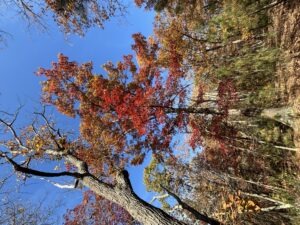
The preserved forest is home to countless plant and wildlife species, including the threatened northern pine snake and barred owl.
The coalition, led by New Jersey Conservation Foundation (NJ Conservation) and Save Barnegat Bay (SBB), included Environment New Jersey, Clean Water Action, the New Jersey Sierra Club, and The Crosswicks–Doctors Creek Watershed Association. While the coalition supported the park’s renewable energy ambitions, it persistently advocated for the preservation of the forest.
The saved woodlands where Six Flags had planned to build the solar field are home to countless plant and wildlife species, including the threatened northern pine snake and barred owl. The forest also encompasses critical headwaters that feed both Barnegat Bay and the Delaware River. To ensure the safety of this ecosystem, the coalition filed a lawsuit in 2015 against Six Flags, the solar developer and Jackson Township to prevent the renewable energy project from being carried out as originally designed.
The lawsuit resulted in a settlement agreement that committed Six Flags to relocate portions of the project to an existing parking lot and secured conservation easements on 257 acres of forest land within the park.
NJ Conservation worked hard to maximize the land to be preserved and to ensure that the most important areas of the park would be covered by the easements — a process involving years of negotiations with Six Flags. NJ Conservation assisted in finalizing the acquisition with assistance from New Jersey Natural Lands Trust and, as part of the team effort, Save Barnegat Bay agreed to hold the easements, which were officially completed this summer.
Under the final agreement, the forest to be cleared for the solar field was limited to 40 acres and, if energy production ever ceases on the site, the area will be left to return to its natural state.
“This is a once-in-a-generation conservation success,” said Britta Forsberg, executive director of Save Barnegat Bay. “The headwaters of the Toms River are the lifeblood of Barnegat Bay. Protecting them means protecting the bay itself. This agreement shows that environmental protection and innovative business solutions can work hand in hand. It’s proof that with collaboration, persistence, and shared purpose, lasting change is possible.”
“We were thrilled to collaborate with Save Barnegat Bay and other partners on this project, which exemplifies how conservation and sustainability go hand in hand,” said Alison Mitchell, executive director of NJ Conservation. “It became a win-win. Pristine natural resources were protected, and Six Flags achieved its goal to be powered by renewable energy.”
Six Flags is reported to be one of the world’s first solar-powered amusement parks.
Explore More
The State
We're In